

Bun kabab vs burger: Why Karachi still loves the local classic
It is 7:30 in the evening, chai is somewhere in the plan, and suddenly a soft toasted bun packed with masala, chutney, and a hot kabab sounds better than anything wrapped in branded paper. The bun kabab vs burger debate may sound unfair in a city full of burger joints, but Karachi has never needed a reason to keep coming back to its own street-side classic.
A burger can fill you up. A bun kabab carries memories with it, from school-day snacks and roadside stalls to those spontaneous evening food runs where one bun somehow becomes two.
Why bun kabab vs burger feels like a very Karachi debate
At first glance, both foods follow the same idea: bread around a savoury filling. That is roughly where the similarity ends.
A burger usually depends on a meat patty, cheese, sauces, and a soft commercial bun. A traditional bun kabab builds flavour differently, using daal, aloo, egg, chicken, chutney, onions, green chilli, and masala depending on the version.
That sharper combination of spice, tang, warmth, and toasted bread is what gives bun kabab Karachi its own identity.
The bun kabab was never trying to be a burger
That matters because bun kabab does not need to compete by becoming bigger, cheesier, or heavier. Its charm is in how much flavour can sit inside something that still feels casual enough to eat standing beside the car.
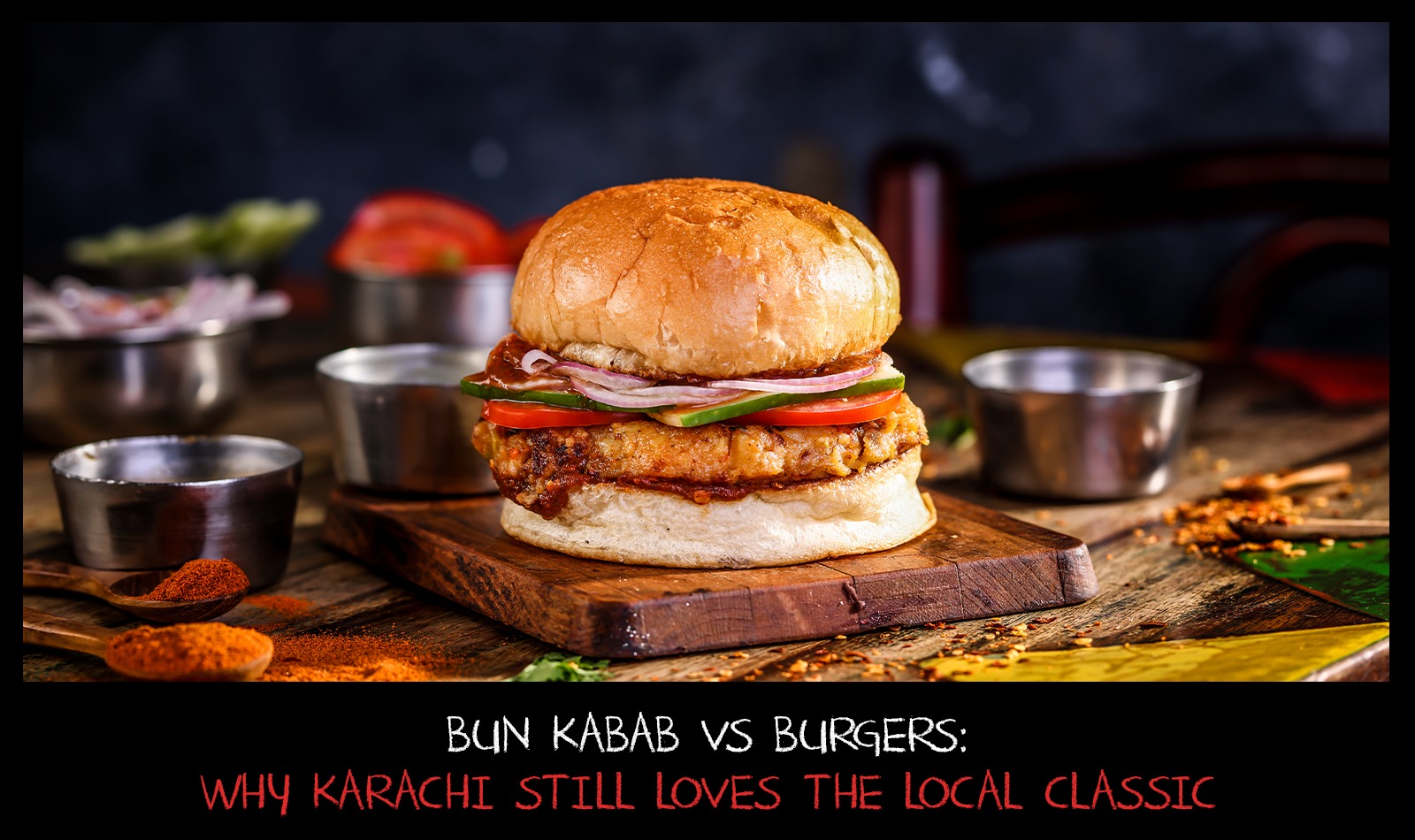
The bun picks up heat from the griddle. Chutney sinks slightly into the bread, while onions bring a raw crunch against the softer kabab.
A little green chilli can completely change the next bite.
Mirchili keeps the local food Karachi character intact
What works at Mirchili is that the bun kabab still feels like local food Karachi families actually grew up eating rather than a street snack polished into something unrecognisable.
The fillings stay at the centre of the experience. Aloo gives you a soft, comforting bite, daal brings a deeper savoury note, while mirchi pushes the heat further for people who want the chutney and spice to stay loud.
Then there are chicken versions when the craving calls for something heavier.
Aloo and daal keep things old-school
An aloo bun kabab has a particular kind of comfort. The potato is soft enough to catch the chutney, while a lightly toasted bun gives the outside just enough resistance before everything gives way.
Daal has more texture and a slightly earthier flavour. It works especially well when the chutney has enough acidity to cut through the warm lentil filling.
Neither needs a mountain of sauce or cheese to keep your attention.
Mirchi is for people who actually want heat
Some people say they like spicy food until the green chilli starts showing up properly. The Mirchi Bun Kabab makes more sense for the other group.
It has a sharper personality than the softer aloo and daal versions. The heat hangs around after the bite, so pairing it with something cooler can help if your spice tolerance sits somewhere around “medium, please.”
That little bit of danger is also part of the fun.
What should you eat with a Karachi street food bun kabab?
A bun kabab can easily stand alone, but Karachi street food is rarely about eating only one thing. Half the pleasure is putting three completely different textures on the same table and switching between them.
Chaat works beautifully because cool yogurt, tamarind, papri, and chickpeas cut through the warm bun and masala. Gol gappay go in the opposite direction, bringing cold pani, crunch, and that sudden hit of khatta flavour.
Add chai afterward and the evening basically knows what it is doing.
When chicken makes more sense
There are nights when aloo feels too light and daal is not quite enough. That is where a chicken-filled bun earns its place.
Chicken tikka adds smokier edges and firmer texture, while bhuna-style chicken brings deeper masala and a richer bite. These options move the bun kabab closer to dinner without losing the handheld street-food feel.
If you skipped lunch, this is probably the direction your appetite was going anyway.
Why Karachi keeps choosing the local classic
Bun kabab fits Karachi because it works with almost every kind of evening. Students can grab one between plans, families can add it to a table full of chaat, and a solo snack can turn into a full meal without much effort.
It also carries less ceremony than a burger outing. You do not need to decide between premium patties, imported cheese, or six kinds of sauce.
Sometimes you just want hot bread, proper chutney, a spiced filling, and something cold to drink beside it.
It tastes connected to the city
That may be the biggest difference. Burgers are everywhere, but a bun kabab feels tied to Karachi in a way a standard fast-food meal does not.
The flavour profile makes sense here: green chutney with enough bite, onions with crunch, masala that actually announces itself, and a bun toasted just long enough to pick up colour.
It feels familiar without becoming boring. That is hard for any food to pull off decade after decade.
Frequently Asked Questions
Here are the questions people usually ask when choosing between the old Karachi favourite and a more familiar fast-food burger.
Why bun kabab is better than burgers in Karachi?
People searching why bun kabab is better than burgers in Karachi are usually comparing more than flavour. Bun kabab offers stronger chutney, spice, onion, lentil, potato, egg, or chicken contrasts while also carrying the nostalgia of the city’s street-food culture.
That does not make burgers bad. They simply satisfy a different kind of craving.
What is the main difference between bun kabab and a burger?
A burger is usually centred on a grilled or fried meat patty with sauces, cheese, and toppings. A bun kabab can use daal, aloo, egg, chicken, or other spiced fillings, with chutney playing a much bigger role.
The texture is different too. Bun kabab often feels softer, spicier, tangier, and less uniform from bite to bite.
How does bun kabab vs fast food Karachi compare for a casual snack?
The phrase bun kabab vs fast food Karachi usually comes down to what mood you are in. Standard fast food tends to be richer and more predictable, while bun kabab gives you more chutney, spice, fresh onion, and griddle-toasted character.
For an evening snack with chai or chaat, the local option often feels more natural.
What makes a classic Karachi bun kabab different?
A classic Karachi bun kabab is defined less by one strict recipe and more by the balance of a soft bun, spiced filling, chutney, onions, and heat. Some versions lean toward daal or aloo, while others bring in egg or meat.
The important part is contrast. Soft against toasted, warm against sharp, and savoury against tangy.
Is bun kabab good for a family food outing?
Yes, especially when everyone wants something different. One person can go for aloo, another can choose chicken, while the table adds chaat, gol gappay, dosa, or another Mirchili favourite around it.
That makes bun kabab easy to share without forcing the whole table into one kind of meal.
When the craving decides for you
There is room in Karachi for towering burgers and grease-stained bun kababs, but when you want that familiar hit of toasted bread, chutney, masala, and spice, the local classic still knows exactly what to do.
Next time the evening starts leaning toward chai and street food, grab the Mirchili bun kabab that matches your mood and let the rest of the table sort itself out.