

Why traditional food Karachi continues to connect generations in Karachi
The best family food plans usually start before anyone opens a menu. Someone mentions chaat, an elder says dosa sounds lighter, a cousin asks for rolls, and suddenly traditional food Karachi feels less like a category and more like a family habit.
Mirchili sits right in that familiar space. It serves the kind of food that works across ages, moods, and spice levels, from crisp masala dosas and soft idlis to chaat, bun kababs, kabab paratha rolls, thalis, and gol gappay.
Why traditional food Karachi still feels personal
Traditional food is not only about old recipes. In Karachi, it is about the way people gather, share, argue over chutney, and keep passing plates until the table goes quiet for a few minutes.
That is why dishes like dosa, chaat, idli, bun kabab, rolls, and gol gappay keep coming back into family plans. They carry memory, comfort, spice, texture, and the easy feeling of eating with people who know your usual order.
How Mirchili keeps Karachi food traditions alive
Karachi food traditions are built around bold flavor and easy sharing. Mirchili keeps that spirit alive by serving food that feels familiar without becoming flat or boring.
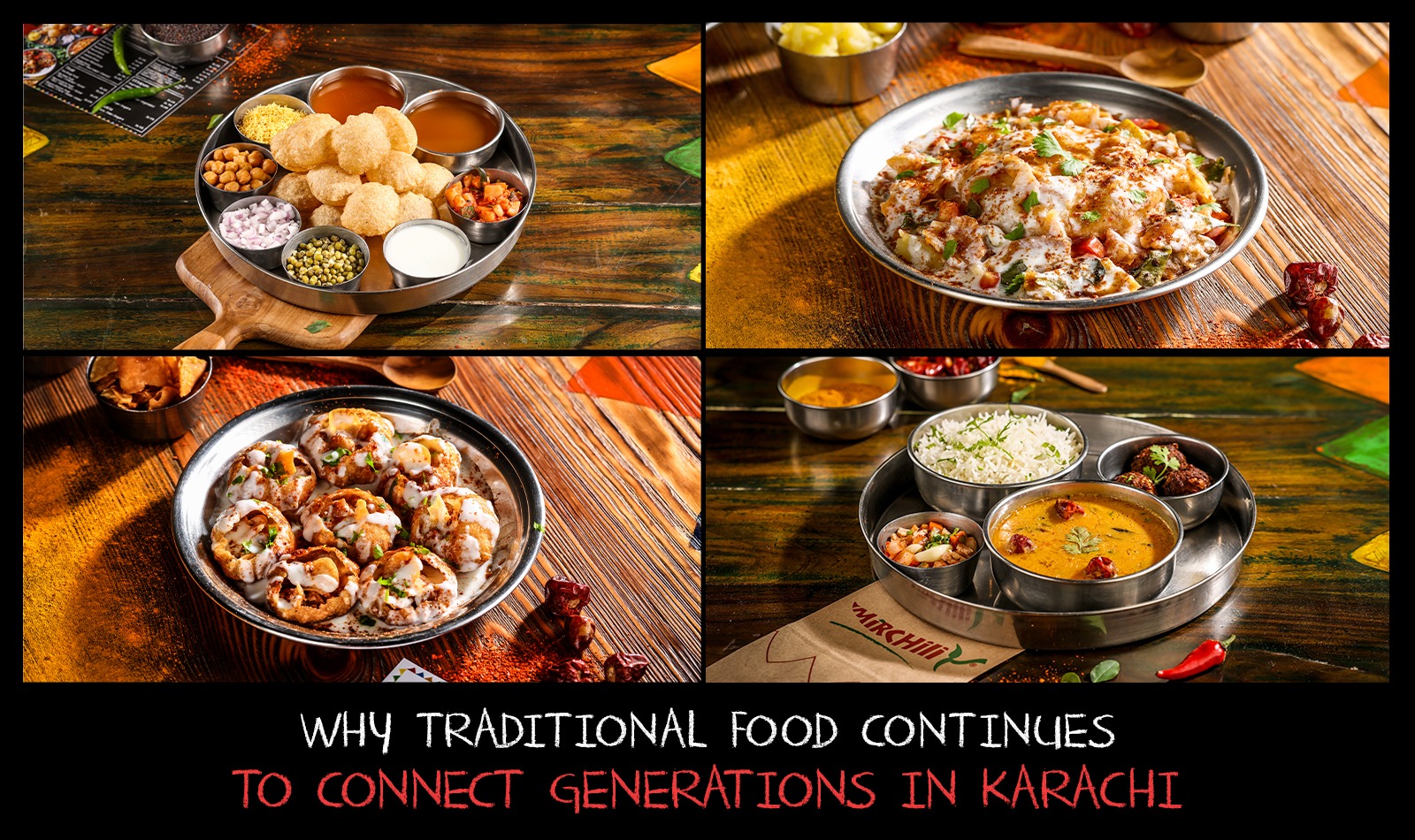
A dosa should crack at the edge and soften near the masala. Chaat should bring yogurt, tamarind, potato, papri, and spice in one full spoon. Gol gappay should be cold, sharp, and slightly chaotic, because neat gol gappay would feel wrong.
The best part is the range. Elders can lean toward idli, dosa, uttapam, or thali, while younger people usually drift toward chaat, rolls, bun kababs, and gol gappay with extra pani.
What generations actually share at the table
The beauty of local food culture is that it does not force everyone into the same plate. A family table can hold soft, crisp, spicy, mild, filling, and snacky food at the same time.
Start with masala dosa if you want something warm and crisp. The sambar adds heat, the potato filling gives body, and coconut chutney cools the bite before the green chutney brings it back up.
Add chaat when the table needs tang. It gives that sour-sweet tamarind pull, creamy yogurt, soft potato, and papri crunch that makes people take “just one more spoon.”
For heavier hunger, bun kababs and kabab paratha rolls do the job. The bun kabab brings soft bread, spiced filling, chutney, and onion, while the roll gives warm paratha wrapped around a stronger, more filling bite.
Gol gappay are for the fun part of the table. The puri cracks, the pani rushes in, and everyone immediately starts judging whether it should be more sour, more spicy, or colder.
Why family dining Karachi works best with flexible food
Family dining Karachi rarely means one perfect dish for everyone. It usually means a mix that lets kids, parents, cousins, and elders all eat in their own style.
Mirchili works because the food can stay casual or become a full meal. A small evening snack can be chaat and gol gappay, while a proper dinner can include dosas, thalis, rolls, and uttapams.
This flexibility matters on weekends. After shopping, after tuition pickups, after a beach drive, or after Maghrib when everyone suddenly wants to go out, food that covers different cravings saves the plan.
Spice also needs a little honesty. Chaat, gol gappay, and rolls can carry a sharper masala profile, so it helps to balance them with idli, dosa, uttapam, sambar, or thali for people who prefer milder bites.
Why Mirchili feels right for family cravings
Mirchili does not need to dress up street food too much. The appeal is in the warm paratha, the crackle of dosa, the chutney that leaves a little heat behind, and the chaat that pulls sweet, sour, cool, and spicy into one plate.
That is what makes the food feel connected to Karachi homes. It is familiar enough for elders, fun enough for kids, and bold enough for the cousin who always asks for extra chutney.
The menu also avoids the usual family-order problem. Nobody has to choose between snack food and proper food, because both can sit on the same table without feeling random.
Frequently Asked Questions
How does traditional food bring families together in Karachi?
If you are asking how traditional food brings families together in Karachi, the answer is in the way people share it. Dosa gets torn into pieces, chaat gets passed around, rolls are split, and gol gappay turn into a small family event.
These foods are easy to talk over, easy to share, and easy to enjoy across generations. They do not need a formal dinner setup to feel special.
What is traditional dining culture in Karachi like?
Traditional dining culture in Karachi is relaxed, social, and full of mixed cravings. One table can have South Indian food, chaat, rolls, bun kababs, thalis, chutneys, and gol gappay, and nobody finds that strange.
The focus is usually on sharing rather than perfect plating. People taste from each other’s plates, compare chutneys, and keep the meal moving.
What are local food traditions Karachi families still enjoy?
Local food traditions Karachi families still enjoy include weekend chaat plans, dosa outings, bun kabab cravings, paratha rolls after errands, and gol gappay shared with loud opinions about the pani. These habits stay alive because they feel simple, familiar, and connected to real family time.
Mirchili fits those habits well because the menu gives different generations something they already understand. It keeps the meal easy, warm, and full of contrast.
Next time the family is split between chaat, dosa, rolls, and gol gappay, Mirchili is an easy place to let everyone get their own kind of craving.